Rubbish Less Recycling and Sustainability
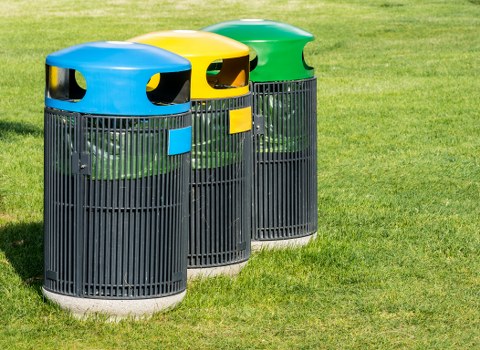 At Rubbish Less, recycling is not treated as an afterthought; it is built into how waste is collected, sorted, and moved onward for recovery. Our recycling and sustainability approach is designed to keep reusable materials in circulation, reduce disposal to landfill, and support a cleaner local environment. We work with a practical recycling percentage target in mind: at least 95% of suitable waste streams should be diverted from landfill through recycling, reuse, or recovery wherever materials and local facilities allow.
This commitment matters because different property types, business sectors, and boroughs produce different waste profiles. Mixed office clearances, domestic clearances, retail packaging, and light construction waste all require tailored handling. By separating recyclable materials early, we can improve recovery rates and help ensure that paper, card, metals, plastics, wood, and green waste are directed toward the right processing route rather than being treated as general rubbish.
We also recognise that boroughs often take different approaches to waste separation. Some local areas encourage stricter sorting of dry mixed recycling, while others place more emphasis on separate collection of food waste, garden waste, or specific containers for glass and plastics. Rubbish Less aligns its operations with these local expectations, helping residents and businesses manage waste in a way that complements borough recycling systems and supports better resource recovery.
 One of the most important parts of our sustainability strategy is using local transfer stations. These facilities allow waste to be handled closer to the source, which helps reduce unnecessary mileage and supports more efficient sorting. Rather than taking every load on a long journey, our crews can direct material through nearby transfer and recovery points where recyclable fractions are separated and prepared for onward processing.
Using local transfer stations also improves the chance that recyclable loads stay clean and uncontaminated. When materials are consolidated responsibly, items such as metal fixtures, cardboard, WEEE-related components, and timber can be extracted more effectively. This is especially valuable in mixed-load collections where a single pickup may contain several material types that need different treatment pathways.
Our recycling-focused operations are supported by a fleet of low-carbon vans that help cut emissions during collection and transport. By choosing vehicles designed for better fuel efficiency and lower emissions, we can reduce the environmental impact of everyday waste movement. This is a simple but important step in making a sustainable rubbish removal service that does not just handle waste, but does so with a lower carbon footprint.
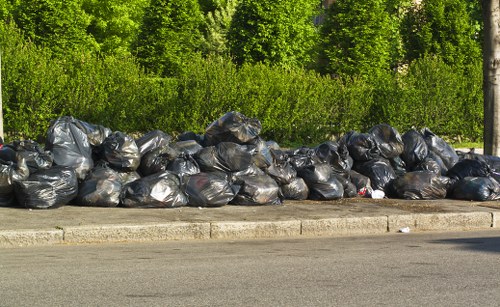 We also place strong value on partnerships with charities and community reuse organisations. Not everything collected needs to be broken down for recycling; many items still have a useful life ahead of them. Furniture, office items, household goods, shelving, and selected appliances may be suitable for reuse if they meet safety and condition standards. Working with charities helps us pass on these items so they can support people and projects in need.
These partnerships are a key part of the wider sustainability picture. Reuse sits above recycling in the waste hierarchy, because keeping an item in circulation avoids the energy and materials needed to process a replacement. Where possible, our teams separate rehomable items before they are mixed with general waste, ensuring that usable goods are given the chance to benefit local groups rather than being discarded prematurely.
Recycling activity can vary from borough to borough, and local infrastructure often shapes what can be processed most efficiently. In some areas, dry mixed recycling streams are common, with paper, cans, and certain plastics collected together; in others, glass or food waste may be managed separately. Rubbish Less pays attention to these patterns so that collections support, rather than undermine, the area’s own waste-separation rules and recycling performance.
Our approach is also informed by the practical realities of urban waste management. In busy residential streets, on high-footfall commercial roads, and around shared access sites, a well-organised collection process can make a meaningful difference. Sorting items correctly before they leave the site helps reduce contamination, which in turn improves the chance that materials will be recycled into new products rather than downgraded or rejected.
Where appropriate, we look for opportunities to separate common recyclable items such as cardboard, plastic film, white goods metals, cable, and untreated wood. We also consider local availability for specialist recycling routes, especially for items that need careful handling. This includes many kinds of clearance work where a mixed load may contain materials suitable for recycling, reuse, or specialist recovery. The more accurately waste is sorted, the greater the likelihood of achieving strong environmental outcomes.
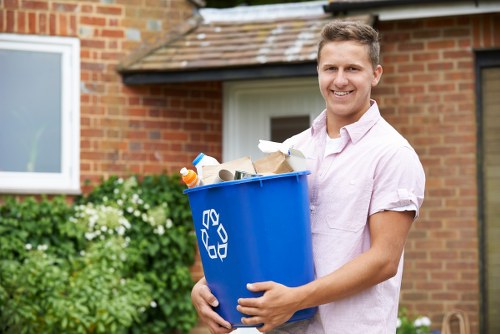 A low-waste service depends not only on recycling output but also on how efficiently collections are planned. By combining route planning with low-carbon vans and nearby transfer facilities, we can help limit fuel use and reduce emissions per job. This matters across the full lifecycle of waste removal: from collection and transit, to sorting, to the final destination of each material stream.
Our goal is to make sustainable waste handling straightforward for the communities we serve. That means staying responsive to borough-level recycling expectations, keeping reusable goods in circulation through charity partnerships, and directing the rest into responsible recovery channels. It also means continuously reviewing how much of each load can be recycled, with the aim of maintaining that 95% diversion target wherever local conditions make it achievable.
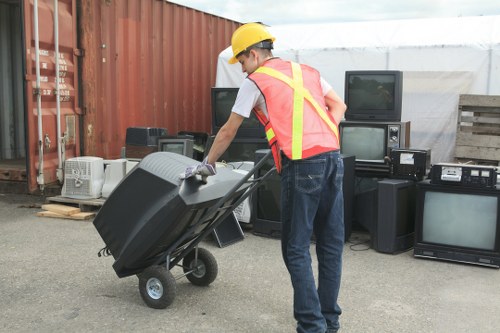 At Rubbish Less, sustainability is not a separate service line; it is the standard we aim to apply to every collection. Whether the load contains cardboard from a shop fit-out, furniture from a flat clearance, or mixed materials from a workspace cleanout, we look for the most resource-conscious route available. In doing so, we support cleaner streets, lower emissions, and a more circular approach to waste across the area.